
Not many relationships are celebrated as passionately as that between a mother and her child. Mothers are honoured in sermons, social media tributes, advertisements and family gatherings. They are described as angels on earth, selfless nurturers and the purest expression of unconditional love.
Much of that praise is deserved. Motherhood is demanding, exhausting and often thankless but somewhere between celebrating mothers and idolising them, we have created a culture where speaking about the harm some mothers cause is treated as an act of betrayal.
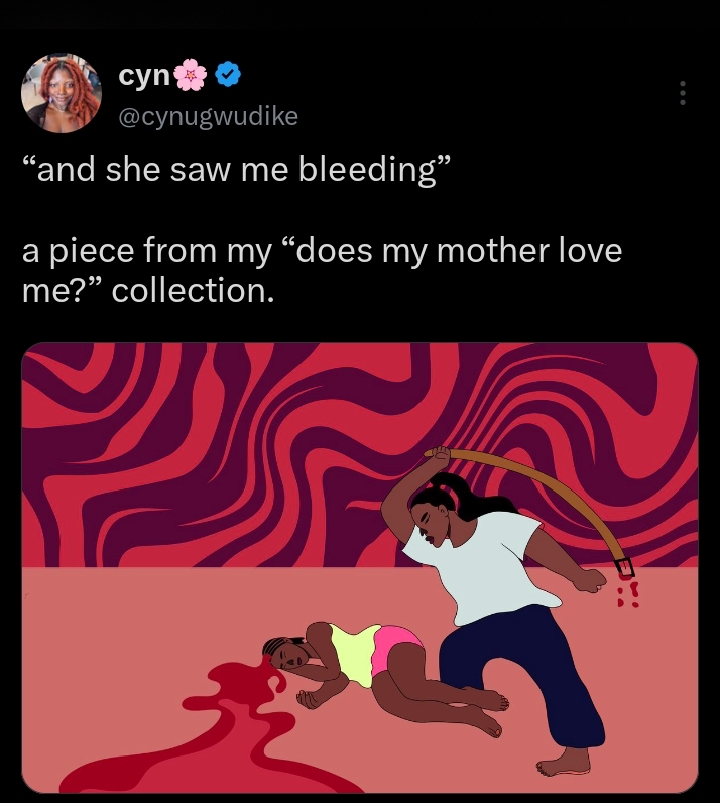
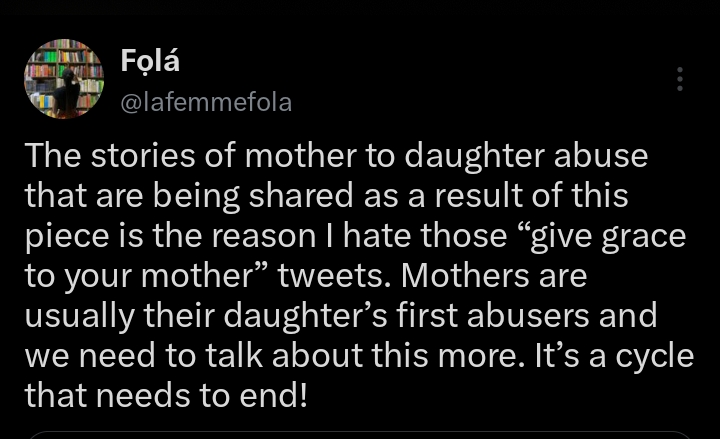
Some weeks ago, an illustration shared by X user Cyn reignited this conversation. It depicted an older woman violently beating a young girl whose head was bleeding. The image struck a nerve, prompting many women to share stories of growing up with mothers who were not their safe place, but their first source of fear.
For some, their first bully was not a classmate or a stranger. It was their mother.
It’s Her First Time on Earth Too
Whenever conversations about toxic parenting arise, the same defence quickly follows:
“She’s also human.” “She’s trying her best.” “It’s her first time on earth too.”
There is truth in these statements. Parents are imperfect, and many are raising children while carrying unresolved trauma of their own but there is another truth that is often ignored: it was the child’s first time on earth too.

Children are not born knowing how to process criticism, rejection or emotional neglect. Their understanding of love, safety and self-worth is shaped by the people raising them. When those lessons are marked by humiliation, intimidation or constant comparison, the effects can last long after childhood ends.
If society extends grace to parents because they are learning, why is that same grace rarely extended to children who are learning too?
When Home Doesn’t Feel Safe
In speaking to several women, one theme emerged repeatedly: love often felt conditional.
One woman described becoming the emotional punching bag whenever her parents argued. Another recalled being blamed after disclosing childhood sexual abuse instead of being comforted. Others spoke of never feeling good enough, no matter how hard they tried, while watching younger siblings receive patience and affection they never experienced.
Many carried the same painful question into adulthood: “If my mother could love my siblings so easily, why was loving me so difficult?”
These stories do not represent every family, but dismissing them because they are uncomfortable only silences those who have lived them.
Listening Without Defending
For many first daughters, particularly in Nigerian homes, childhood comes with expectations far beyond their age. They are expected to be responsible, emotionally mature and endlessly understanding.
Yet when they speak about painful relationships with their mothers, they are often labelled disrespectful, bitter or ungrateful. They are told to “know better.”
But know better than whom?
Their mothers have lived decades longer and experienced far more of life. If mothers are given grace because they are learning, shouldn’t children receive that same grace? One of the most frustrating responses to these conversations is, “My mother would never do that.”
That may be true, but someone else’s loving mother does not erase another person’s painful reality. Healing begins with listening, not comparison.
Making Room for Both Truths
This conversation is not about vilifying mothers. It is about rejecting the idea that motherhood places anyone beyond criticism. A mother can sacrifice for her child and still cause emotional harm. She can love deeply and still leave lasting wounds. Both realities can exist at the same time.
If we want healthier families, we must create room for honest conversations instead of demanding silence in the name of respect. The next time someone shares the pain of growing up with a difficult mother, resist the urge to defend motherhood before listening to the child.
Empathy is not a limited resource. We can celebrate mothers who loved well while also acknowledging those whose deepest childhood wounds came from the people who were meant to protect them.
After all, if we are willing to remember that “it’s her first time on earth,” we should remember something equally important:
It was the child’s first time on earth too
The post We Celebrate Mothers. Why Are We Afraid to Talk About the Ones Who Hurt Their Children? appeared first on Agbonstyle.com.