
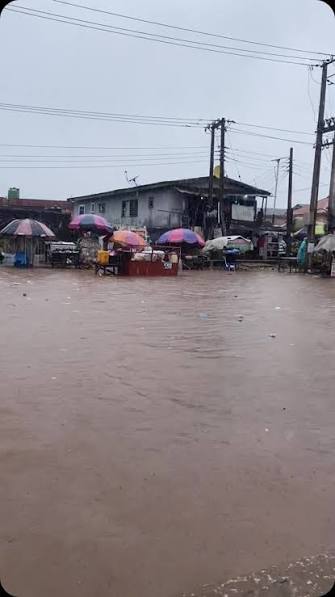
July, the seventh month of the year, also marks our official entry into the rainy season. It’s a season we associate with roasted corn on every street corner and that particular smell of fresh rain hitting dry earth but it’s also a season that comes with its own trials. Every year, without fail, the rains return, and so does the flooding.
Areas like Dumez, Isihior along S&T Barracks, Adolor, and Uselu are especially prone to flooding, and it’s not just an inconvenience, it disrupts transport, business, and daily movement for thousands of residents. To understand what this actually looks like on the ground, we spoke to a few citizens navigating this rainy season firsthand.
Chiamaka, 28, Uselu, feels it most in her pocket. “Transport fare has gone up, especially when it’s raining,” she says. “You cannot even try to negotiate the price because the driver will leave you. A place that’s supposed to be 300 naira, you’ll be hearing 500 or 700 naira, and you don’t have an option, so it’s either you enter or you allow the rain to drench you.” For Chiamaka, the rain doesn’t just wet the roads; it taxes anyone who needs to get anywhere.
For Mama Osato, 45, who sells in Adolor, the flooding has rewritten her entire work schedule. “It has not been easy o,” she says. “Now, we close on time because of the rain. Sales are dwindling because the place where I sell is very prone to flooding.” Her shop sits in one of the areas hit hardest each season, and when the water rises, business simply stops, no customers, no sales, no way around it.
Eghosa, 25, had barely settled into Dumez when the rains introduced themselves. “Just newly moved to the area, so on this particular day, the junction was filled with water — knee length,” he recalls. Stranded and unfamiliar with the area, he was fortunate that a bus driver dropped him at Adesuwa and pointed him in the right direction. “That’s how I was able to get home that day,” he says, a reminder of how disorienting flooding can be for anyone who doesn’t already know which roads to avoid.
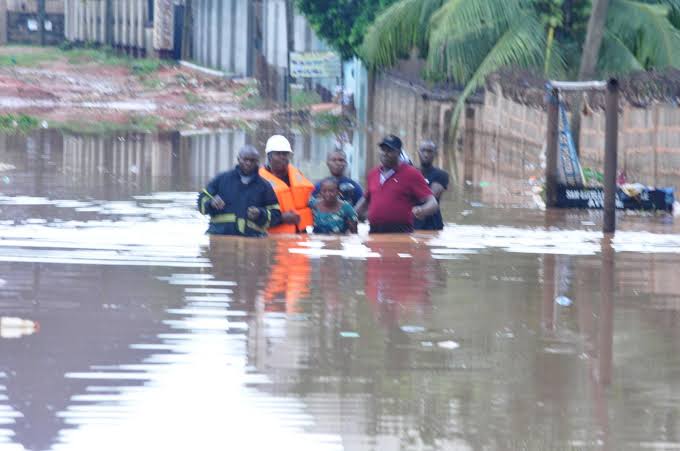
Joseph, Ekenhuan Road, keeps it simple. “Yes o, it has affected the work,” he says. “If the rain is too heavy, I go home.” Asked about a recent bad day, he can’t pin down the exact date, “last week, I cannot remember the day”, a small detail that says a lot about how routine the disruption has become. For now, he says, “we manage it,” the kind of quiet resignation that seems to define how most residents are getting through this season.
Four different people, four different corners of the city, but the same story on repeat: people suffer, get a reprieve during the dry season and then gear up to suffer again when june rolls around Benin City floods in the same places, in the same ways, every single rainy season, which means this isn’t a surprise anyone should still be reacting to and yet, there is still zero moves being made to interrupt this pattern.
Until proper drainage becomes a priority and not an afterthought, residents will keep doing what they’ve always done: adjusting their fares, their schedules, their routes, and their prayers, one rainstorm at a time.
The post The Cost of Rain: Benin City Residents Speak on Flooding appeared first on Agbonstyle.com.